A Boarding School Teacher Shares the 30-Day System Helping Nigerian Parents Pull Their Sons Back From Phones, Yahoo, and Failing Grades

You walk into his room, and he hides the phone under the pillow before you have said a single word.
Not because he is hiding something small. Because somewhere along the way, you became the enemy.
You tell yourself it is just a phase. Every teenager goes through something like this. But something in your chest doesn't quite believe you.
You remember when he used to talk to you. About small things. About his day, his friends, the small stupid things that used to make him laugh. Now most days you get one word answers, if you get any answer at all.
You have seen the school fees receipt. Hundreds of thousands of naira. And the last result still came back with more red than you know how to explain to anyone at the next family gathering. The fees alone could have paid for something else entirely, and you keep asking yourself what exactly you are paying for.
At night, when the house is finally quiet, you have typed things into Google that you would never say out loud. Signs your son is into Yahoo. Is my child watching pornography. How to know if your teenager is using drugs. You clear the search history before anyone sees it.
You have tried taking the phone away. He went cold for a week, distant, resentful, like a stranger in your own house and you gave it back, because the silence frightened you more than the phone ever did.
You have tried the church. The pastor spoke to him kindly. He nodded politely. Nothing changed by Monday.
You have tried waiting for his father. Either he is away working and can't deal with it, or he comes home, shouts once, and disappears again for three more weeks and the boy drifts right back to where he started.
And somewhere underneath all of it, there is a question you have not said out loud to anyone. Not your sister. Not your husband. Maybe not even fully to yourself yet.
Where did I go wrong?
You didn't go wrong. You are a parent standing in a situation nobody prepared you for, watching a system: schools, social media, peer pressure, a whole culture telling boys that hard work is for fools. Pulling your son somewhere you can't follow.
Drop everything you are doing right now, and read every word of what I am about to tell you.
Because I am about to walk you through the exact 30-day system I built from years of sitting across from parents in this exact seat, the same approach that is helping Nigerian mothers and fathers get their sons back before phones, Yahoo, and failing grades take them somewhere none of us want to imagine.
Where this actually comes from
This is not an old family secret or something whispered down from a healer. It is something I built, slowly, from the inside of a Nigerian boarding school watching the same story repeat itself, year after year, boy after boy. And tested quietly with real boys in my own schools' hostel because too many parents are fighting this exact battle completely alone, with no map.
Hi, I am Mr. Michael Eze.
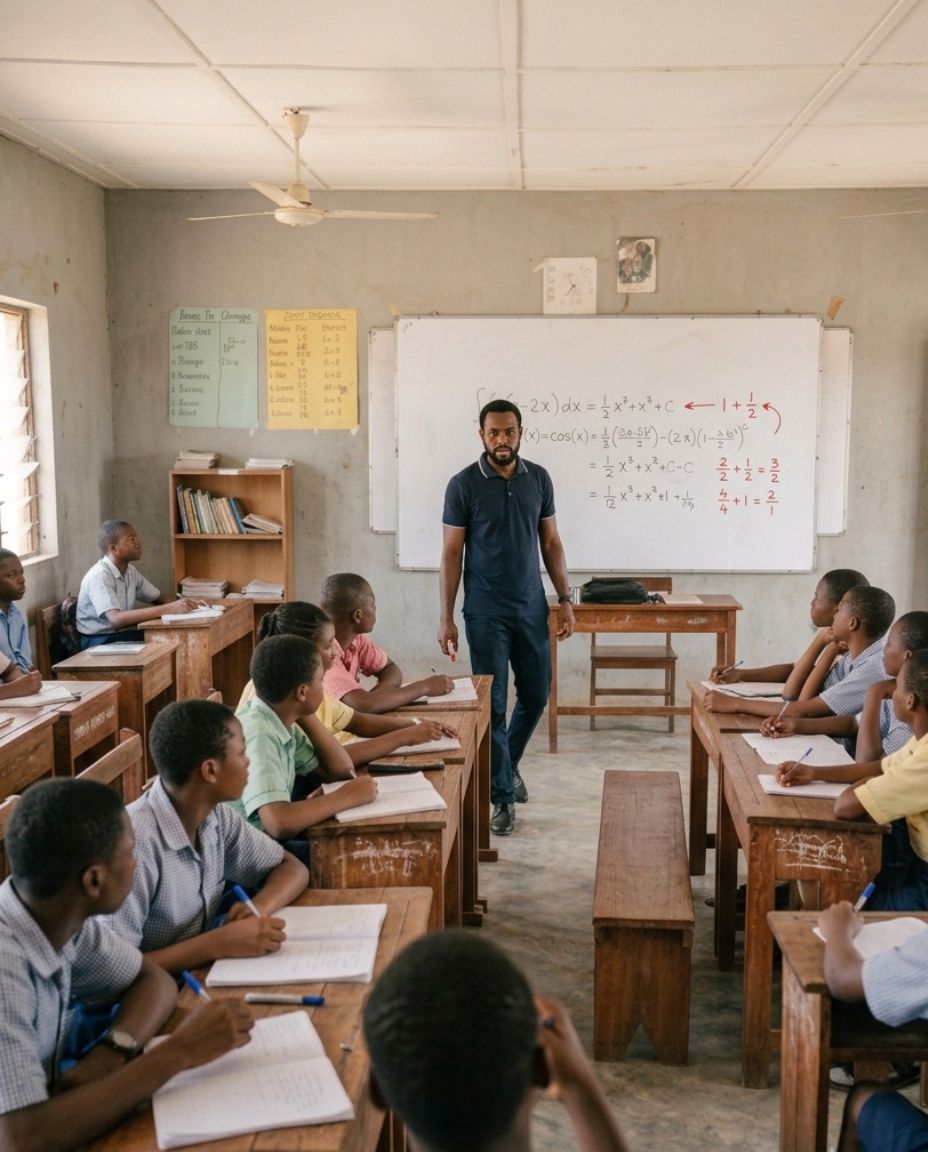
First thing you should know about me: I am not a therapist. I am not a psychologist. I am not a pastor or a priest with a special gift for troubled teenagers. I am a Mathematics teacher who has spent years living inside a boys' boarding school, teaching in the classroom by day, and serving as a hostel master to roughly 150 teenage boys after school hours.
That second part is the one that matters most here. A classroom shows you a boy for forty minutes at a time. A hostel shows you who he actually is at 11pm when he thinks no adult is watching, in the strange silences when a usually loud boy suddenly goes quiet. The slide toward Yahoo culture from the inside, not as a headline, but as a whispered conversation between boys who think no adult is listening.
What I have seen, up close
I did not set out to build a system. I started as a Mathematics teacher who was handed an extra job looking after a hostel of about 150 teenage boys, on top of sixteen teaching periods a week. What I expected to be a side responsibility became one of the most educational stretches of my life. Not about Mathematics. About boys.
When I first took on the hostel duties, I assumed the boys who were struggling were simply lazy, or stubborn, or badly raised. That was the easy explanation. And It was not totally correct.
You start to notice patterns when you live alongside that many teenagers. You see who goes quiet at night. You see which boys talk about "who just bought a new phone during the holiday" in a tone that tells you exactly what kind of money paid for it.
You see the boy who used to read during prep who would suddenly stop. The phone hidden, and smuggled in becomes the centre of his world. Grades would slide. Respect for any kind of authority would slide with it. And underneath all of it, a quiet, growing pull toward the fast money culture that is everywhere now.
The moment that really broke something open for me was a conversation with a mother at a parent meeting. Her son, an SS3 students, final term, the term that decides everything had not opened a book in months. She admitted, quietly, that she had been hiding his results from his father. "His father would kill him," she said. Not as exaggeration. As fact, in her mind.
I remember thinking: this woman is fighting this battle completely alone, and the one person who should be fighting beside her does not even know there is a battle because she is hidding it.
A lecturer friend of mine once told me about her own son, a university student, well past his teenage years whom she had caught watching pornography on his phone, and who told his younger sister plainly that since he had not been given a phone early enough, he was going to do everything his friends had already done, all at once, now that he finally had one.
Another colleague of my lecturer friend told me about a young relative of his a pre-degree student at the same university where he lectures who refused to take her studies seriously, to the point where he had threatened to stop paying her fees entirely.
Different ages. Different genders. Same root: a young person who has quietly decided that the phone, the games, the fast money, or the attention online matters more than anything an adult is trying to teach them and parents standing on the outside of that decision, completely locked out.
The emotional cost I kept seeing in these conversations was not really about the grades, even though grades were always the headline. It was something quieter:
Parents genuinely afraid of their own children. Parents hiding things from their spouse because they were terrified of how the other parent would react. Parents who had tried every method they knew and were running out of ideas, patience, and hope in that order.
The quiet, rational despair of a boy who watches graduates around him driving keke and concludes that following the rules is a losing game. The way peer pressure inside a hostel can make "being different" feel more dangerous than failing. And the one almost nobody talks about, the way two parents (or a parent and a grandmother, or a parent and a generous but undermining father) can be pulling in completely different directions without either one realising it.
I watched almost every parent reach for the same five tools, in roughly the same sequence:
Take the phone away and watch the boy go cold and resentful until it comes back.
Switch schools and watch the same behaviour resurface within a term, sometimes worse.
Bring in the church and get a respectful nod and no lasting change.
Wait for the father to "deal with it properly" and get one good week, followed by three weeks of nothing, because discipline that is not consistent is not really discipline.
Hand the boy a motivational book and hope something clicks only to hear almost the exact same dismissal every time: "Mummy, those people are abroad. That is not Nigeria."
None of these are bad instincts. They are just incomplete. They treat the symptom and never touch the actual mechanism underneath it.
Reconnect first, before any correction. Get the adults in the house speaking with one voice, because a boy will always follow whichever authority costs him less. Give him a legitimate identity to compete with the one he is chasing online. And then, slowly, hand him real responsibility because a boy who has never been trusted with anything real will go looking for mastery somewhere, usually a game, sometimes something worse.
That sequence is what eventually became The Village Protocol, four weeks, in that exact order, with the specific scripts, tools, and conversations that go with each one.
I will be honest with you: when I first sat down to put this on paper, I doubted some of it myself at first. It felt almost too simple. How could changing the first sentence of a conversation matter against something as serious as Yahoo culture?
I wondered whether any system could compete with a phone built by some of the most talented engineers on earth to be addictive. It cannot, not head-on. But that was never really the fight. The fight is not the parent against the phone. It is the parent learning to use leverage they already had at home, and simply never knew how to use properly.
What I can tell you, from years of doing some version of this informally: one boy, one family, one conversation at a time, long before I ever called it a "protocol" is this: the houses where both parents (or a parent and whichever relative actually had influence) agreed to move together saw a real shift, usually within the first few weeks. The houses where one parent quietly worked against the other almost never did, no matter how good the individual advice was. That single insight gets the house aligned before you try anything else, is the one I wish every parent I have ever spoken to had heard on day one, instead of month eighteen.
I got tired of having a version of this same conversation, one parent at a time, in hallway corners after school meetings and quick phone calls between classes. So I took the whole sequence: the order, the scripts, every tool and put it into one guide.
Introducing...

Inside this guide, you will find:
- The exact phrase that shuts a boy's emotional door in seconds and the one to use instead, starting tomorrow morning.
- A 4-week, day-by-day calendar that tells you precisely what to do and when, so you are never guessing what comes next.
- A private "house alignment" exercise that shows you who in your own home may be quietly working against you and how to bring them back on side.
- A calm, specific script for the question most parents are too afraid to ask for the moment the money, the phone, or the spending suddenly doesn't add up.
- A one-page tool that uncovers your son's real strengths even the ones currently pointing in the wrong direction and shows you how to redirect them toward something legitimate.
- A simple way to bring an absent father, uncle, or grandmother onto the same page in one conversation, without it turning into a confrontation.
- The specific warning signs that tell you a setback is starting again and the exact first move to make before it spreads.
And here is the best part: you don't need a counsellor's salary, a miracle pastor, or a confrontation that ends in tears to use any of it. It is the same sequence I have used quietly, one family at a time, for years finally written down properly, in order, with the exact words to use.
What Parents Are Saying
Just so you know what this is really worth
A single term of what you may already be spending could buy this guide many times over:
- Extra lesson fees most months: ₦10,000 – ₦30,000
- One private counselling session in most Nigerian cities: ₦15,000 – ₦40,000+
- One more school fee cycle if nothing actually changes: ₦200,000+
- Another year passing with no shift at all, a cost no naira figure covers
I am not charging you what a single counselling session costs. I am not even charging you what one month of extra lessons costs.
₦9,800
($9.97 for readers outside Nigeria)
This launch price is available until August 31, 2026. After which, it becomes ₦15,000.
Two things I am including alongside the main guide
If you get The Village Protocol today, these come with it at no extra cost:
The WAEC Mathematics Confidence Restart: A short, focused guide for reintroducing Mathematics to a boy who has switched off academically, written from my own experience teaching the subject every day.
The Red Flags Checklist: A single printable page listing the early warning signs of phone addiction, withdrawal, and risky online behaviour, so you can check in quickly without searching through the whole guide.

Why the timing matters
- WAEC and JAMB registration windows come around fast, and Mathematics is usually the subject that decides whether a result holds up.
- A new school term or resumption period is often the easiest natural moment to reset routines at home, waiting until mid-term makes everything harder.
- The longer a pattern like this continues unaddressed, the more it settles in as "just who he is now", both to him and to the people around him.
Still feeling unsure? I understand.
Here is my promise: read through the guide and apply the first week honestly. If, after 30 days, you feel it has not given you anything useful, send a message and ask for a refund. No long explanation needed.
I'd rather you try this without the worry of losing ₦9,800 than have that worry stop you from trying something that might actually help.
More Reviews
It comes down to one decision
The price won't stay this low forever. But more importantly than that, every month this continues unaddressed is a month your son spends a little further from home. The decision is yours.